M
Marx Atanga Foundation Nkwen · Bamenda
Nkwen, Bamenda · Northwest Region, Cameroon

School fees, clean water, and someone checking on the elders.

Everything the Marx Atanga Foundation does happens in one village — Nkwen, in Bamenda — and it is as wide as that village's needs: schooling, orphans, old age, water, light, and families who arrived with nothing.

20+ elders supported in Nkwen, every month since July 2022
30+ students sponsored through school
15 orphans supported — in school, or apprenticed to a trade
100+ solar street lamps installed in the village

Twenty is not the number of elders in Nkwen who need help. It is the number the Foundation can currently afford. The list is kept honest rather than generous.

What we do now

Four strands of work, running since 2022, all of them in and around Nkwen and all of them decided by what people there say they need.

Underway

School, or a trade

More than thirty students are sponsored outright — fees, books and uniforms — at Government Bilingual Secondary School Mbelem-Nkwen and elsewhere. Fifteen orphans are supported separately: some of them in school, others learning a trade, because the way out is not the same road for every child.

  • 30+ students sponsored
  • 15 orphans supported, separately
  • Apprenticeships in mechanics, construction, electrical work, hairdressing and photography
  • Fees paid directly, plus books, uniforms and scholarships
Underway · monthly

Support for elders

Every month since July 2022, support for elderly people in the Nkwen community. The kind of help that is easy to overlook because it is not dramatic, and that matters because someone keeps coming back.

  • Every month since July 2022
  • Delivered in person, in Nkwen
  • Funded entirely by the Founder
Underway

Water and light

A borehole with a solar-powered pump, so clean water does not depend on the grid — and more than a hundred solar street lamps, so the village is not dark at six o'clock.

  • Borehole with solar-powered pumping
  • Over 100 solar street lamps installed
  • Built to serve every household, not a selected few
Underway

Displaced families

People displaced from their homes elsewhere in the North West have arrived in and around Nkwen carrying very little. The Foundation supports some of them.

  • Support for internally displaced people
  • Identified locally, case by case
  • No conditions attached
Nkwen is home to our Founder, and supporting its children is not a burden but an honor. — From the Foundation's letter to GBSS Mbelem-Nkwen, October 2026

Why the school chooses

The Foundation does not decide from Maryland which child is most in need. The principal and teachers of GBSS Mbelem-Nkwen identify the students; the Foundation pays. The school reports back on how those students are doing, and tells us what else they are short of.

The credit belongs to the students, who show up and work hard, and to the staff who guide them.

Not every child is on the academic road

The fifteen orphans the Foundation supports are counted separately from the sponsored students, and they are not all in classrooms. Some are apprenticed in motor mechanics, construction, electrical work, hairdressing and photography.

None of these is a consolation prize. Vehicles in Bamenda need mechanics. The region is building. A place putting up solar lamps and solar pumps needs people who understand wiring. And a salon or a camera is a business a young person can own outright — weddings, funerals, school photographs, a chair of their own — rather than a job they have to wait for somebody else to offer.

An apprenticeship ending in a skill someone can earn from is worth more than years of schooling that ends nowhere. Pushing every child down the same road is how good intentions waste a life. What each one needs is asked, not assumed.
The elders of Nkwen

Old age in a community without a pension is held up by family, and when family is far away or gone, by neighbors. The Foundation's monthly support is meant to be one more thing an elder can count on.

Every month, not when convenient

The Foundation was formed in June 2022 and the first distribution was the following month. It has gone out every month since, to more than twenty elders.

That regularity is the point. Support that arrives unpredictably is a kindness; support that arrives on schedule is something a person can plan around — for food, for medicine, for the costs that otherwise get postponed.

Quietly, and from one pocket

No appeals, no campaigns, no outside funding. This has been paid for by the Founder, and the only people who needed to know about it were the elders receiving it.

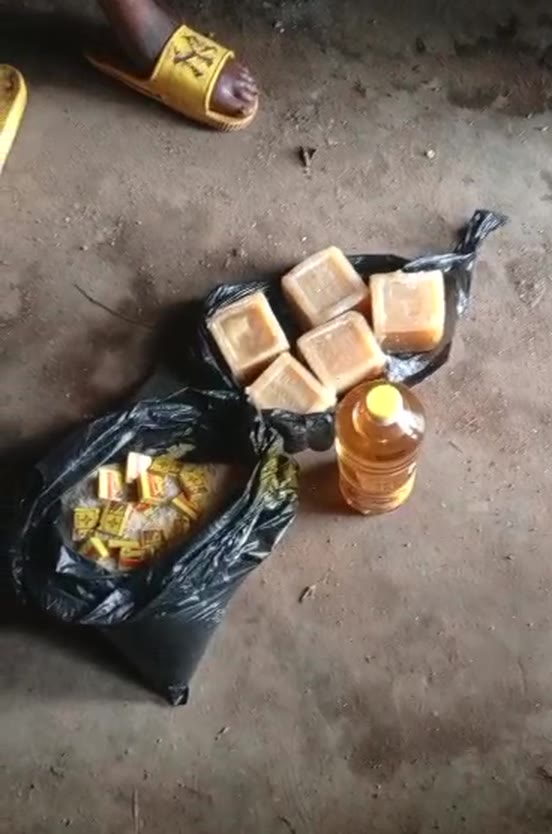
Bars of soap, a bottle of cooking oil and a bag of seasoning laid out on a swept earth floor, beside a sandal.
One month's parcel, on the floor of the house it was delivered to: soap, cooking oil, seasoning.

Why there are no faces here

Every distribution is recorded, person by person, and the Foundation keeps those records. They are not on this page and they will not be.

The elders supported here are old, often unwell, and filmed in their own homes. Nobody should have to appear on a website in exchange for a bar of soap. What we show is what we give.

Asked for, not assumed

None of this was planned from Maryland. Each item on this page began with somebody in Nkwen saying what was missing — which is why the list looks nothing like the one an outsider would have written.

A borehole that works when the power does not

Clean water close to home changes a day more than almost anything else, and it is women and children who otherwise do the carrying. Running the pump on solar means the borehole keeps working through the outages that make grid-powered boreholes useless half the time.

Light in the streets

More than a hundred solar lamps now stand in the village. Street lighting is not a luxury where the evening is the only time many people can trade, move about, or get home from school — and solar means they come on whether or not the grid does. It changes how safe a place feels after dark.

Catholic Primary School, Mile Six, Mbelem

Three desktop computers, a laptop and a laser printer, bought from a supplier in Bamenda and installed at the school. For most of these children it is the first computer they have used.

Nursery graduation gowns

Graduating from nursery is a real occasion to a small child and to the parents watching. The Foundation bought the gowns so the youngest children got the same ceremony anyone else would get — photographs included.

Families who arrived with nothing

The crisis in the North West has moved a great many people out of their villages. Some of them have ended up in and around Nkwen, living with relatives, with strangers, or in whatever they could find — children out of school, households starting again from nothing.

The Foundation supports some of these families. Not all of them, and not enough — but the ones it reaches are identified by people who live there and know who is struggling.

How it is decided

Case by case, on the word of people in the community, with no conditions attached and no requirement that anyone explain themselves. Displacement is not a status someone should have to prove twice.

In development

Cassava, and the longer game

Cassava grows well around Nkwen and harvests nearly year-round, but most of it leaves the area unprocessed. A processing plant is being developed to change that — buying from farmers around Nkwen, employing people from the community, and keeping more of the value of the crop in the region instead of sending it away raw.

Products
Garri, cassava flour, starch, chips
Raw material
Local growers, peak August–January
Markets
Households, bakeries, Northwest & Southwest regions

At start-up

  • Contract purchasing from local growers
  • Five full-time positions
  • Solar drying, to work around the power supply
  • Supplying households, bakeries and regional markets

Why a business, not a program

The processing plant is an enterprise, not a grant program. It is intended to stand on its own, and in time to pay for the rest of the Foundation's work in Nkwen rather than compete with it for money.

About the Foundation

Who runs it

The Marx Atanga Foundation was founded by Dr. Marcelius Atanga, who was born in Bamenda and now lives in Waldorf, Maryland. It works in Nkwen, where he is from, with people who live there.

How it is funded, plainly

The Marx Atanga Foundation is funded by its founder. It does not hold 501(c)(3) tax-exempt status, and it does not solicit or accept public donations. Nothing given to it would be tax deductible.

We say this here so that nobody has to guess. If that changes, this page will change with it.

Get in touch

For schools, community groups and partners in Nkwen and Bamenda — or anyone who wants to know more about the work.

marxatangafoundation@gmail.com

Marx Atanga Foundation · Waldorf, Maryland, USA